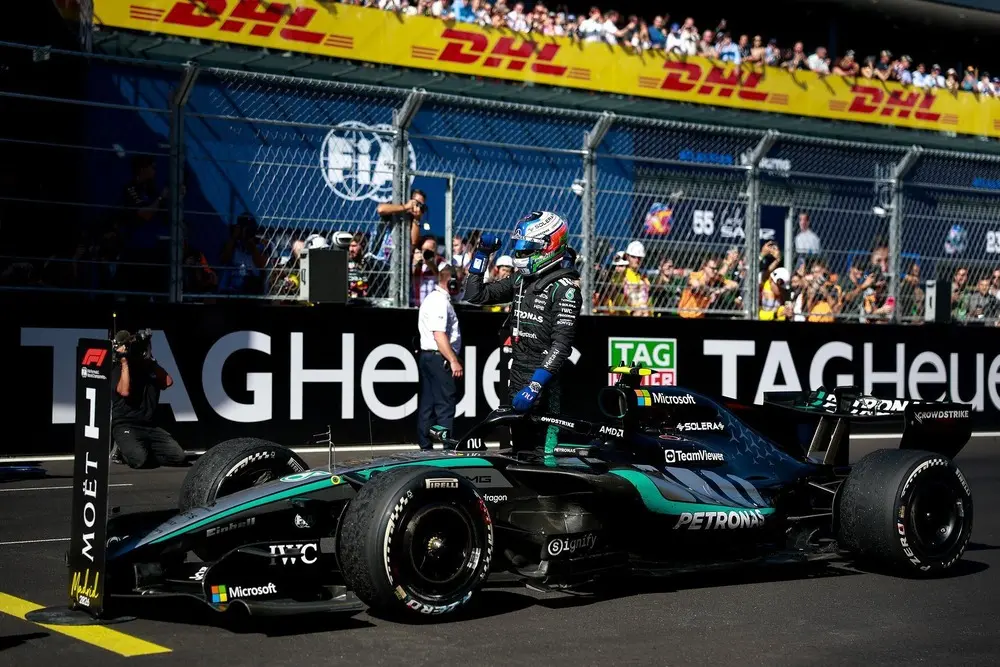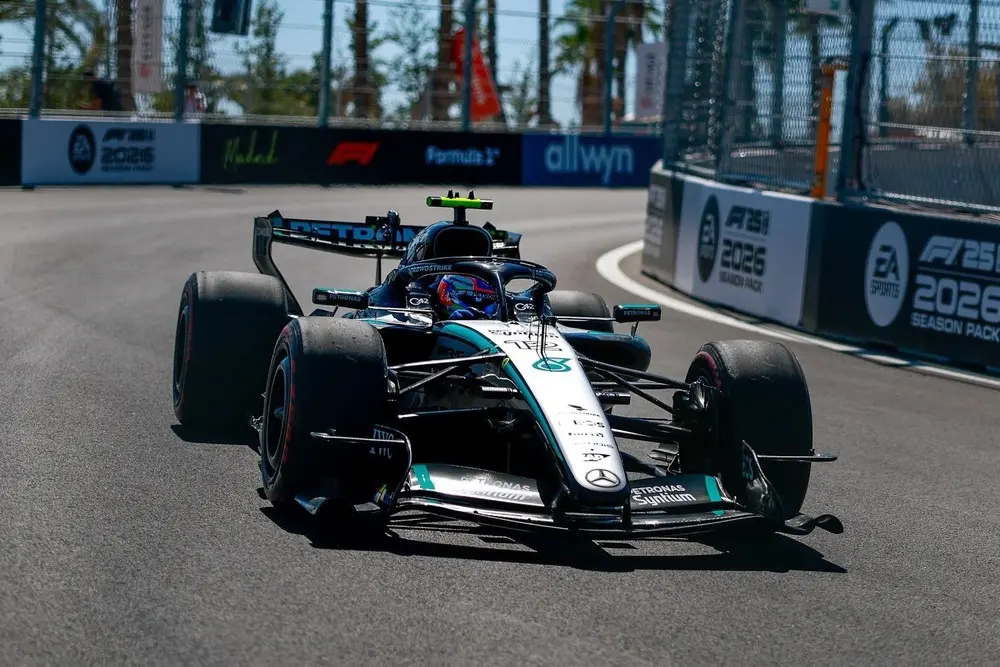


Amateur footage featuring the groundbreaking Audi 2026 F1 car shakedown run at Barcelona has gone viral as the team released the first real-world glimpses of the new Formula 1 regulations in action.
The closely guarded filming day event, conducted behind closed doors saw the German manufacturer’s challenger, the R26, complete its initial laps, providing invaluable data while teasing the radical design shifts set to redefine grand prix racing from next season onward.
As the first team to roll out a 2026-spec machine on track, Audi positioned itself at the forefront of the grid’s transformation blending cutting-edge engineering with strategic secrecy to build anticipation ahead of its factory team debut.
The shakedown unfolded at the iconic Barcelona-Catalunya circuit where Audi utilized one of its two permitted filming days to accumulate up to 200 kilometers on demonstration tires.
These sessions are designed for promotional footage and systems validation rather than outright performance benchmarking, allowing teams to iron out basic functionality without revealing competitive edges.
Team drivers Nico Hulkenberg and Gabriel Bortoleto took turns behind the wheel to familiarize themselves with the R26’s characteristics.
Social media erupted as amateur footage from a vantage point near Turn 13 leaked online via YouTube and X, capturing the Audi R26 in motion despite the event’s private nature.
Grainy yet revealing clips showcased the car navigating the Spanish layout’s sweeping corners, its engine note echoing with a robust timbre that hinted at the overhauled power unit’s potential.
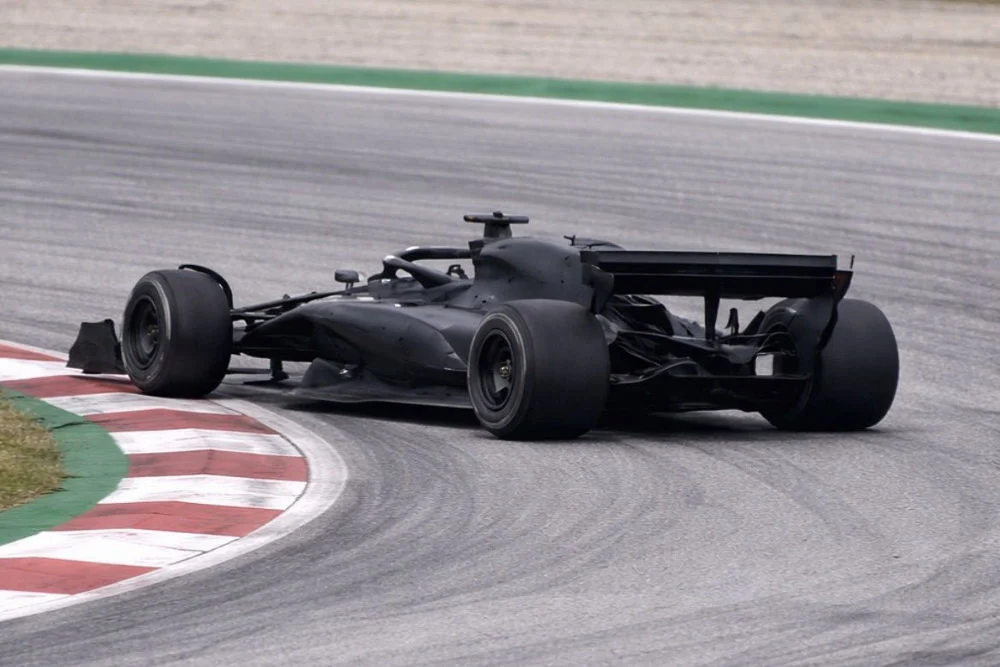
Audi quickly followed with official teaser images on its platforms, deliberately blurred to obscure finer details while confirming the shakedown’s success and declaring, “We’re officially rolling.”
This controlled reveal strategy not only quelled rampant speculation fueled by AI-generated fakes circulating earlier but also amplified global buzz, underscoring the manufacturer’s savvy approach to hype management in an era of instant digital dissemination.
At the heart of Audi 2026 F1 car shakedown in Barcelona lies adherence to the FIA’s sweeping 2026 technical regulations, engineered to foster closer racing, sustainability, and road relevance while slashing costs and attracting new manufacturers.
Ferrari Project 678: Inside the bold 2026 F1 car development plan
Confirmed 2026 F1 car launch dates: When will teams reveal their new liveries?
Cars shrink dramatically: 100mm narrower at 1900mm wide, 200mm shorter wheelbase at 3400mm, and lighter by up to 30kg through simplified aerodynamics and componentry, promising agile responsiveness on twisty circuits like Monaco or Singapore.
Narrower 18-inch Pirelli tires further cut drag and weight, while the elimination of front wheel arches streamlines airflow for cleaner lines.
The Audi R26’s spied silhouette vividly illustrated these shifts, with its noticeably slimmer profile dominating the footage as it powered through Barcelona-Catalunya high-speed sectors.
A slightly raised nose tip and in-washing front wing configuration emerged as focal points, the latter designed for precise wake control per FIA mandates, directing turbulent air away from other cars to enhance overtaking opportunities.
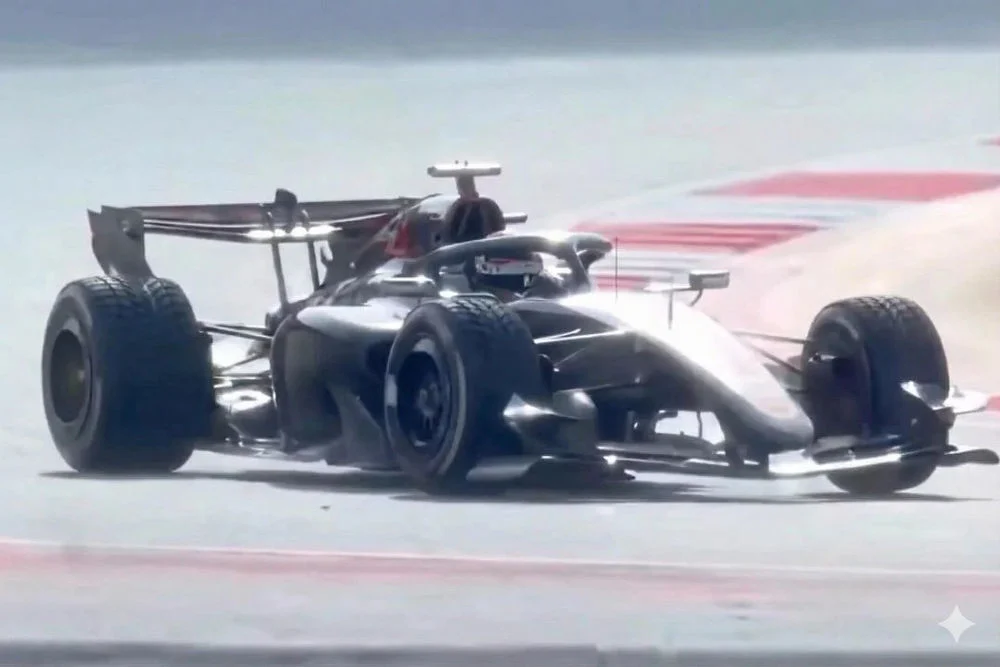
Front wing endplates now incorporate a footplate and flick-up elements to shield wheel-generated vortices, a critical evolution for managing front-wheel airflow in the pursuit of cleaner rearward wakes.
The front push-rod suspension featured prominently on the R26 with the track rod inclined from the chassis bulkhead to the wheel upright, optimized for anticipated softer spring rates under less ride-height-critical floors.
Sidepod design hinted at an in-washing philosophy, channeling airflow around the bodywork to bolster the Coke bottle region’s efficiency, potentially drawing cooler air through central channels without exposing rear tires to excessive turbulence.
The rear axle appeared to feature push-rod suspension as well, aligning with trends from the previous regulations cycle that prioritized packaging for low center of gravity, though grainy visuals left room for interpretation pending official unveils.
The rear wing’s double underside mount replaces the swan-neck DRS integration, signaling adaptation to active aerodynamics that obsoletes traditional DRS.
READ MORE:
Key 2026 F1 regulations changes explained: Comprehensive guide to Formula 1’s new era