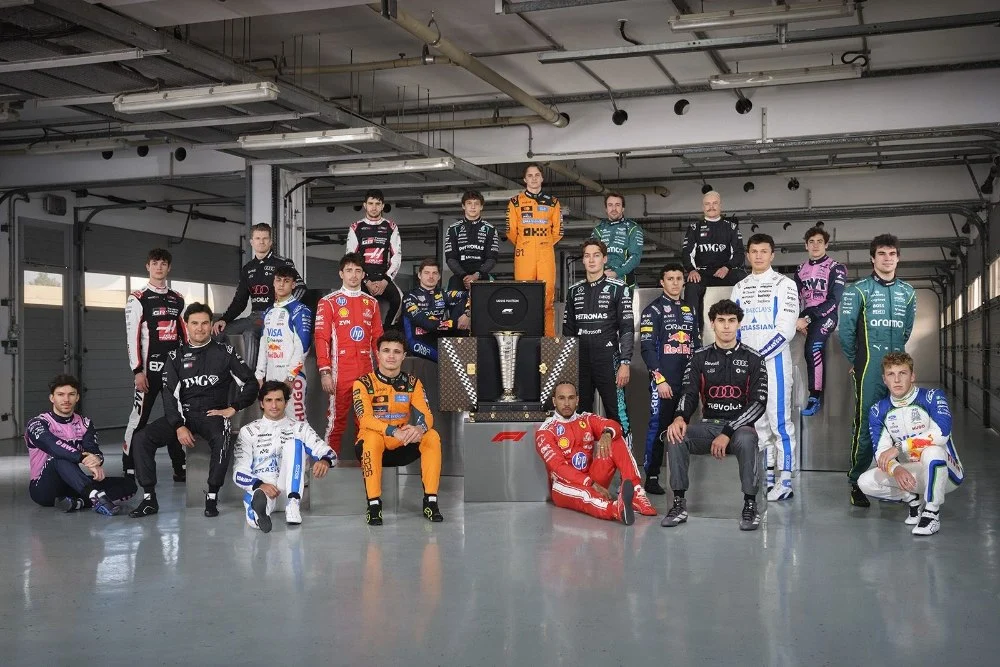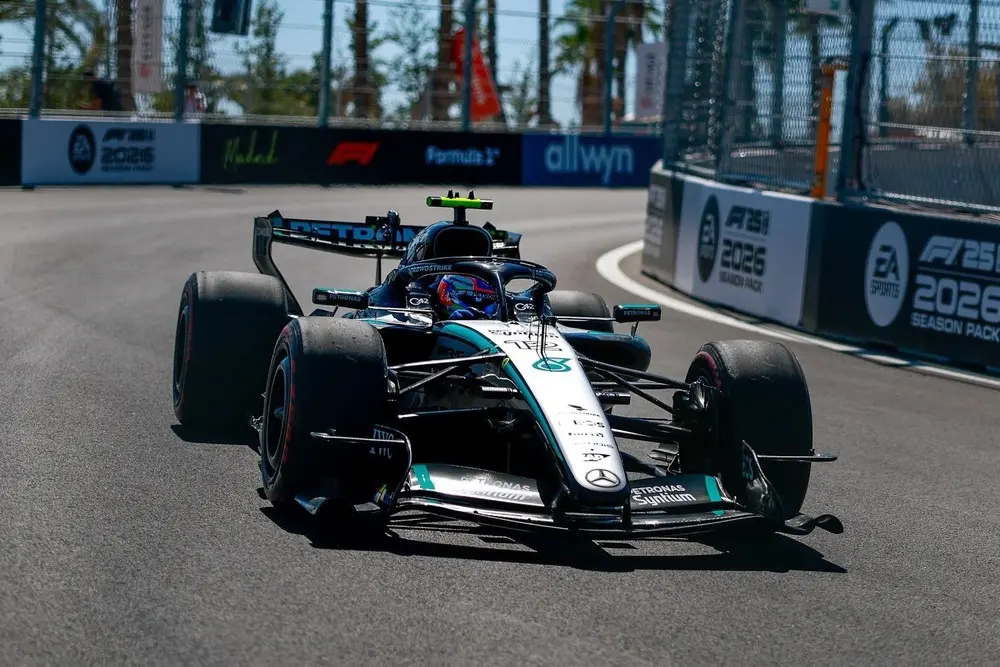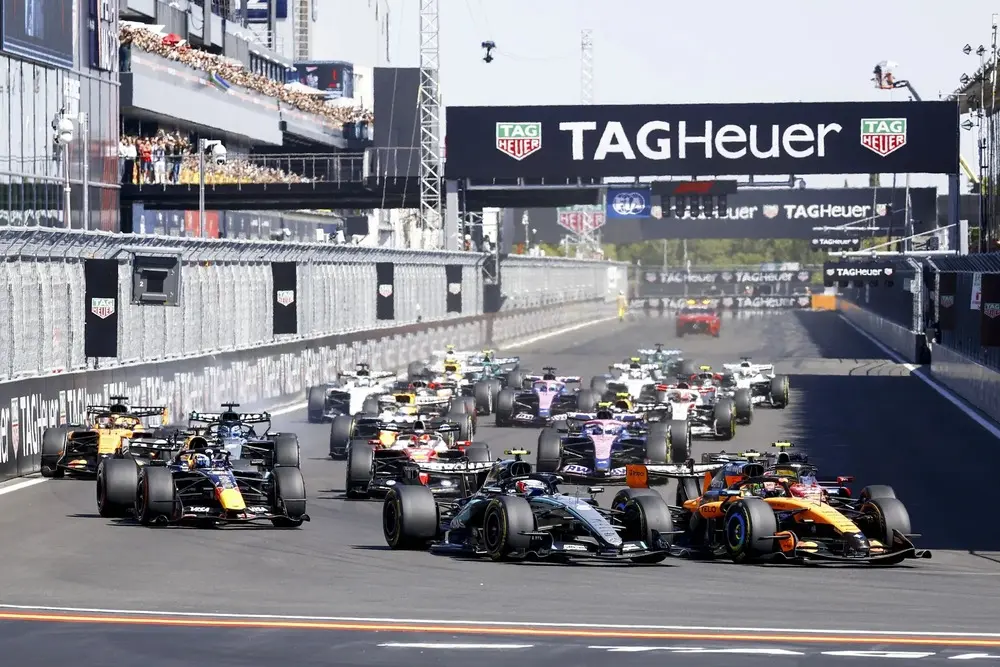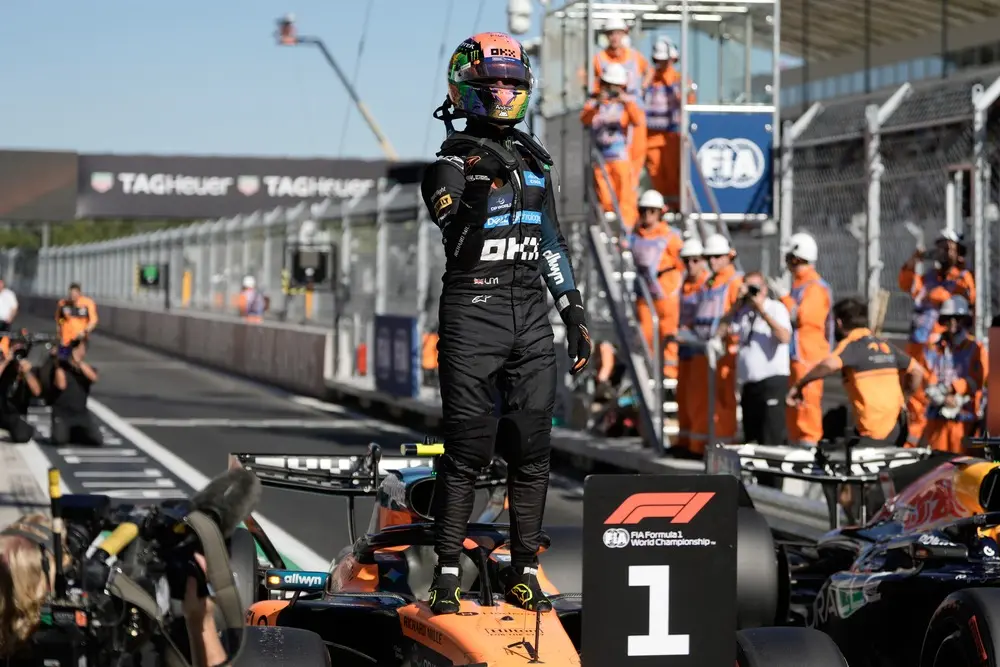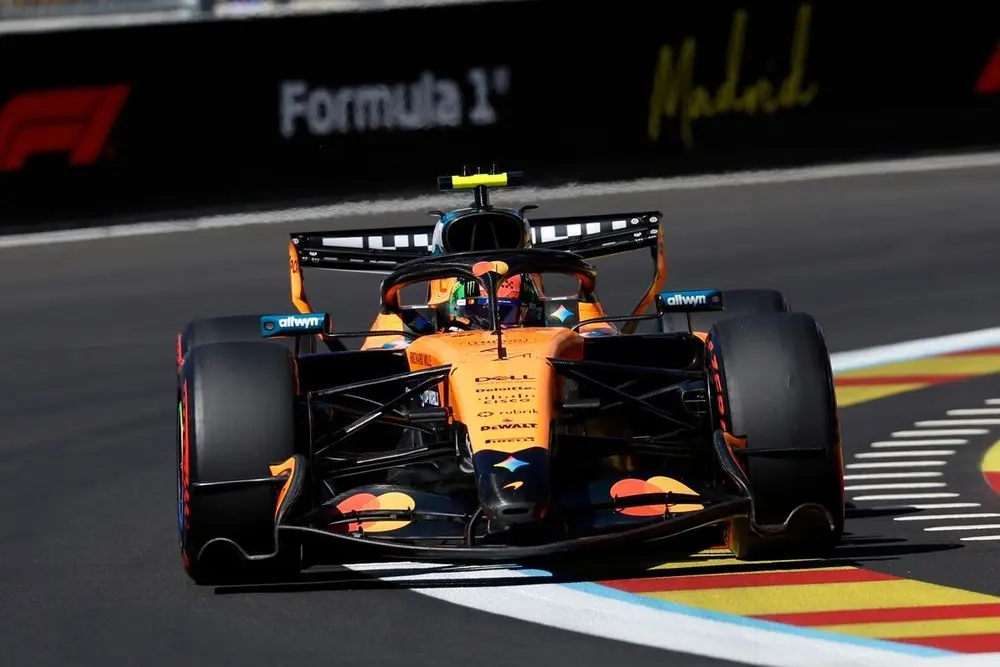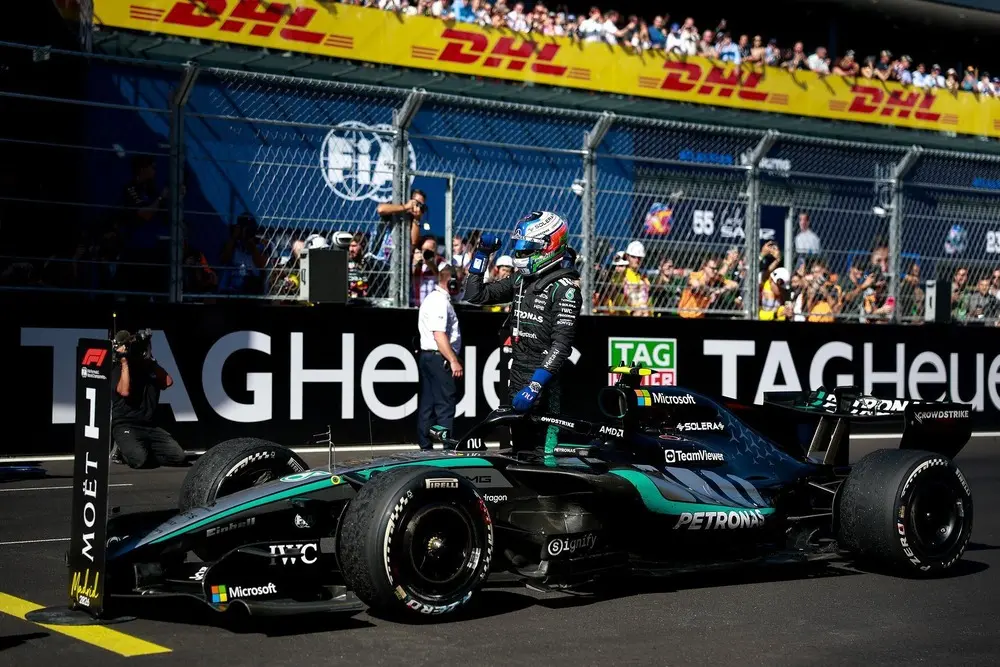
Max Verstappen, Lewis Hamilton and Lando Norris top the list as the highest‑paid Formula 1 drivers in 2026, while Charles Leclerc holds the longest contract on the current grid.
With the total estimated base salaries for the 22 drivers on the grid reaching a record-breaking threshold, currently estimated at approximately $324 million according to Forbes, the economic footprint of the drivers has never been more significant.
However, understanding the nuances of these earnings requires looking beyond the base figures often cited in public reports.
The modern Formula 1 contract is a multifaceted document, frequently incorporating substantial bonuses tied to race victories, podium finishes, and final positions in both the Drivers’ and Constructors’ Championships.
For established stars like Verstappen at Red Bull, whose base salary is frequently cited in the $65 million to $70 million range, the addition of these performance-related bonuses can elevate his total annual intake to well over $76 million.
Similarly, the move of seven-time world champion Lewis Hamilton to Ferrari has fundamentally altered the top-tier earnings hierarchy with his base salary reported at approximately $70 million, further bolstered by significant commercial partnerships that push his total annual potential into a stratospheric bracket.
The disparity between the highest-paid drivers and those at the nascent stage of their careers remains a defining feature of the grid, yet the floor for professional entry into the sport has risen alongside the technical demands of the machinery.
Mid‑season 2026 F1 rule changes explained: What are the key adjustments made by FIA?
While rookies and younger talents in teams like Racing Bulls or Audi might see base salaries starting around the $2 million to $5 million mark, these figures rarely tell the whole story of their total potential compensation.
Performance bonuses, often structured to reward points scoring or consistency during a development year, can significantly inflate these initial contracts, demonstrating that even those at the lower end of the financial hierarchy are compensated for their integral role in a team’s long-term developmental strategy.
2026 F1 driver salaries and contract lengths
| Driver | Team | Salary | contract length |
|---|---|---|---|
| Max Verstappen | Red Bull | $76m ($65m salary + $11m bonuses) | end of 2028 |
| Lewis Hamilton | Ferrari | $70.5m ($70m + $0.5m bonuses) | end of 2026 |
| Lando Norris | McLaren | $57.5m ($18m salary + $39.5m bonuses) | end of 2027 |
| Oscar Piastri | McLaren | $37.5m ($10m salary + $27.5m bonuses) | end of 2028 |
| Charles Leclerc | Ferrari | $30m | end of 2029 |
| Fernando Alonso | Aston Martin | $26.5m ($24m salary + $2.5m bonuses) | end of 2026 |
| George Russell | Mercedes | $26m ($15m salary + $11m bonuses) | end of 2027 |
| Lance Stroll | Aston Martin | $13.5m ($12m salary + $1.5m bonuses) | end of 2026 |
| Carlos Sainz | Williams | $13m ($10m salary + $3m bonuses) | end of 2026 |
| Kimi Antonelli | Mercedes | $12.5m ($5m salary + $7.5m bonuses) | end of 2026 |
| Pierre Gasly | Alpine | $12m | end of 2028 |
| Alex Albon | Williams | $8m | end of 2026 |
| Nico Hulkenberg | Audi | $6m | end of 2026 |
| Esteban Ocon | Haas | $6m | end of 2026 |
| Isack Hadjar | Red Bull | $5m | end of 2026 |
| Valtteri Bottas | Cadillac | $5m | end of 2027 |
| Sergio Perez | Cadillac | $5m | end of 2027 |
| Franco Colapinto | Alpine | £3m | end of 2026 |
| Liam Lawson | Racing Bulls | $3m | end of 2026 |
| Oliver Bearman | Haas | $2m | end of 2026 |
| Gabriel Bortoleto | Audi | $2m | end of 2026 |
| Arvid Lindblad | Racing Bulls | $500,000 – $1m | end of 2026 |
READ MORE:
F1 drivers wives and girlfriends: Who are current Formula 1 stars dating?
Most F1 race wins: Drivers with most victories in Formula 1 history