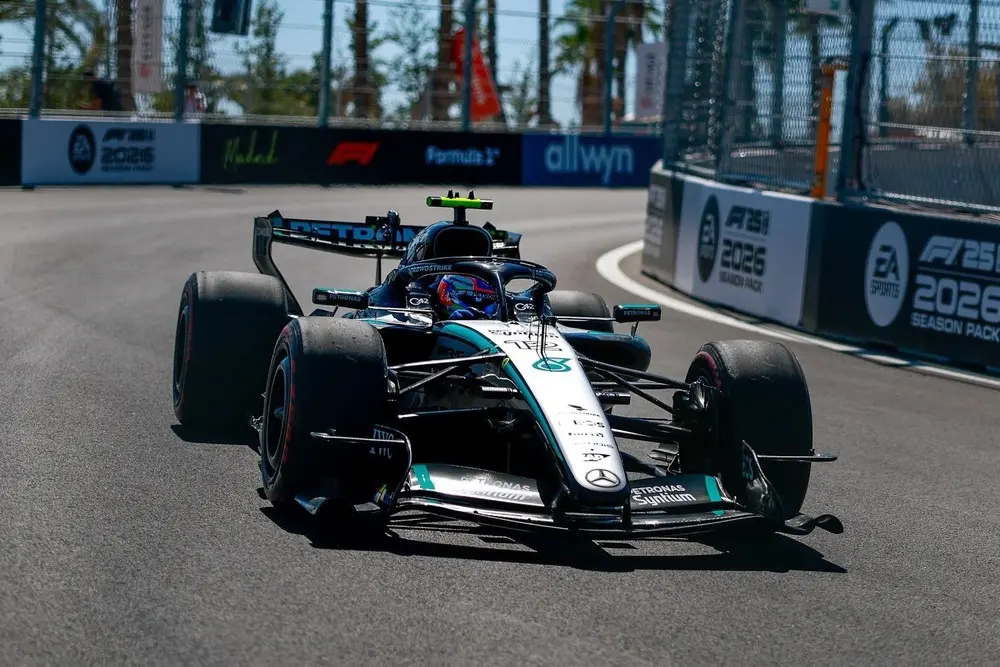

Adrian Newey seems to have identified a potential loophole in the 2026 F1 rules as he lifted the lid on the development progress of Aston Martin 2026 F1 car.
The renowned design mastermind who joined the British team in early 2025 is currently developing the basic elements of the AMR26 and is keen to find creative innovations to tackle the limited flexibility of the new Formula 1 rules.
Adrian Newey is no stranger to the pressures and intricacies of major rule changes, having played pivotal roles during previous seismic shifts in Formula 1’s regulatory framework.
With over 200 race victories and 26 combined Drivers’ and Constructors’ titles achieved across teams such as Williams, McLaren, and Red Bull, Newey’s arrival at Aston Martin has raised expectations the team could be a potential disruptor under the 2026 F1 rules.
The developmental timeline imposed by the new regulations has forced Newey and his team into an intensive, laser-focused routine.
Much of his work—described by colleagues as entering a “design trance”—has centered around the fundamental aspects of the Aston Martin 2026 F1 car that will remain fixed for the entire season.
These include the suspension setup, the physical dimensions of the fuel tank, and the wheelbase, all of which play a decisive role in balancing the car’s weight distribution, handling characteristics, and versatility across diverse tracks on the calendar.
“We are designing the layout of the front and rear suspension, the fuel tank size and the wheelbase,“ the 66-year old told German publication F1-Insider.
“On the one hand, we don’t have enough time, and on the other, our simulation tools may be a bit weak. So we have to try to make the best possible assessments.
“If necessary, the body and wings can be adjusted during the season.“
The 2026 F1 regulations herald the most fundamental technical overhaul the sport has witnessed in decades.
Engine and chassis rules will change in tandem, with the cars becoming lighter and more compact, integrating a 50:50 power split between internal combustion engines running on sustainable fuel and advanced electric motors.
A defining feature will be the introduction of active aerodynamics in two distinct modes—X-mode for minimizing drag on straights and Z-mode for maximizing grip through high-speed corners—reflects attempts to offer teams tactical options.
A manual override for deploying extra electric power while overtaking is another innovation intended to enliven the racing.
Yet, underlying concerns persist regarding whether active aerodynamics and energy management complexities may place smaller teams, or those lacking advanced development tools, at a disadvantage.
In a previous interview, Newey had suggested the new rules appear to suffocate creative innovation but admitted a deeper look could give some room for flexibility just like the 2022 ground-effect regulations.
Carlos Sainz questions Red Bull rejection to sign him as Max Verstappen teammate
Toto Wolff rules out Max Verstappen to Mercedes move for 2026 F1
He said: “My thoughts on the ’26 regulations are similar to what my thoughts were about the big regulation change for 2022: initially thinking the regulations were so prescriptive that there wasn’t much [flexibility] left here.
“But then you start to drill into the detail and realise there’s more flexibility for innovation and different approaches than first meets the eye.
“We saw that at the start of 2022, with teams taking really quite different directions. Now, of course, four seasons on, they’ve largely converged, but initially that wasn’t the case.
“Variation between teams is great. It’s all a bit boring if the cars look identical and the only way you can tell them apart is the livery.
“I think there’s a high probability that in ’26 we’ll see something similar to ’22. There’s enough flexibility in the regulations, and I’m sure people will come up with different solutions.
“Some of those will be dropped over the first two or three years as teams start to converge.”
Newey’s comments seem to suggest he has identified a potential loophole in the 2026 F1 rules that could give the Aston Martin a huge performance advantage.
The car will be powered by Aston Martin’s new engine partner Honda, marking return of the Japanese manufacturer after parting ways with Red Bull.
READ MORE: F1 Drivers’ wives and girlfriends: Who are current Formula 1 stars dating?