
NASCAR has unveiled a major adjustment to stage lengths for the NASCAR Cup Series race at Talladega Superspeedway on April 26 in a direct effort to counter the pervasive fuel-saving tactics that have plagued superspeedway racing in recent years.
This change flips the traditional format on its head, extending Stage 1 to conclude on Lap 98, Stage 2 on Lap 143, and the final Stage 3 on Lap 188, moving away from the previous structure of roughly 60-120-188 laps that often encouraged drivers to throttle down dramatically.
By making the initial stage longer and the latter two shorter—each under 50 laps—NASCAR aims to eliminate the need for green-flag pit stops in the closing segments, forcing teams to race flat-out without the incentive to conserve fuel for strategic position gains.
The announcement revealed on April 12, 2026, comes amid growing frustration from fans, drivers and analysts who have watched superspeedway events devolve into processional parades rather than the high-octane spectacles they are famous for.
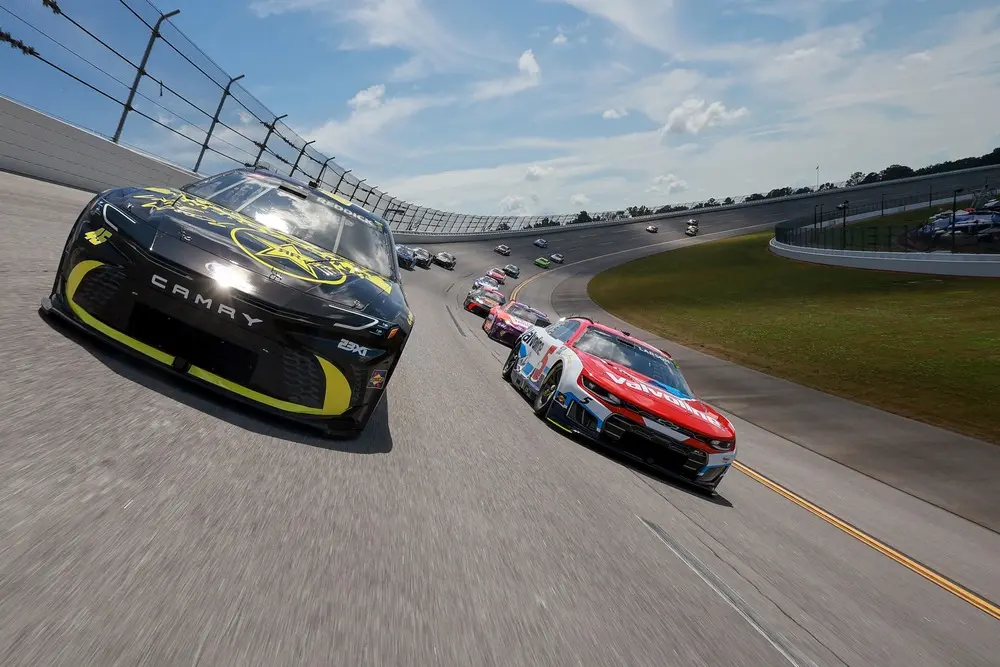
Fuel-saving strategies emerged prominently with the introduction of the Next Gen car in 2022, which, despite its intent to level the playing field through standardized parts, introduced high drag coefficients that make passing exceedingly difficult at tracks like Talladega and Daytona.
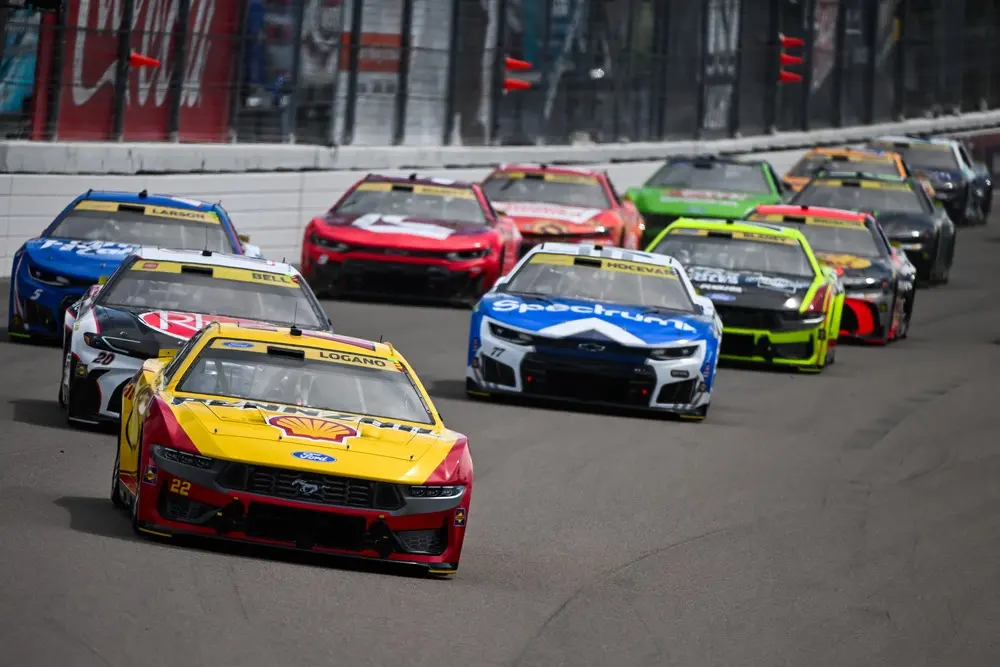
Drivers often drop to half-throttle or less, sometimes as slow as 175 mph in the draft while coordinating with allies to stretch fuel windows and minimize pit time, turning what should be door-to-door battles into fuel-mileage chess matches.
While this tactic is brilliant from a competitive standpoint, it has drawn ire for producing conveyor-belt racing that lacks the chaos and unpredictability.
Executive Vice President John Probst elaborated on the “Hauler Talk” podcast how the new NASCAR Talladega stage lengths will ensure drivers can reach the end of Stages 2 and 3 on one tank after pitting, removing the math that teams exploit so masterfully.
“Coming out of Daytona we have been working hand-in-hand with a lot of our race teams trying to largely break into two categories things we could do,” Probst said. “One is sporting related things like rules around pit stops or stage lengths or things of that nature. The other being in a technical bucket, which would mean car changes: spoiler, power level, things of that nature.
“As we went through all of our options, not just with NASCAR but even with the teams, there’s a little bit of reluctance to just make wholesale changes to any of the technical stuff in the middle of the season for fear of the unintended consequences.
“If you look at generally how a lot of our speedways were laid out it was a short stage, a short stage and then a long stage to the end.
“Going into Talladega Superspeedway, we’re going to flip that and adjust the lengths of the final two stages such that we’re confident that the last two stages are short enough to be made without a fuel stop.
“It could be interesting, as well, in that first stage, the length of it, if there’s some that try to do it on one stop versus some that try to do it on two.
“We think that if there are some that try to do it on two, they may drag the group that tried to do it on one along with them to where they won’t be able to do it in one, so it’s got the potential there for some pretty interesting strategies.”
READ MORE:
Full 2026 NASCAR Kansas weekend schedule: Session start times, where to watch
New 2026 NASCAR Cup Series points standings after Bristol Food City 500