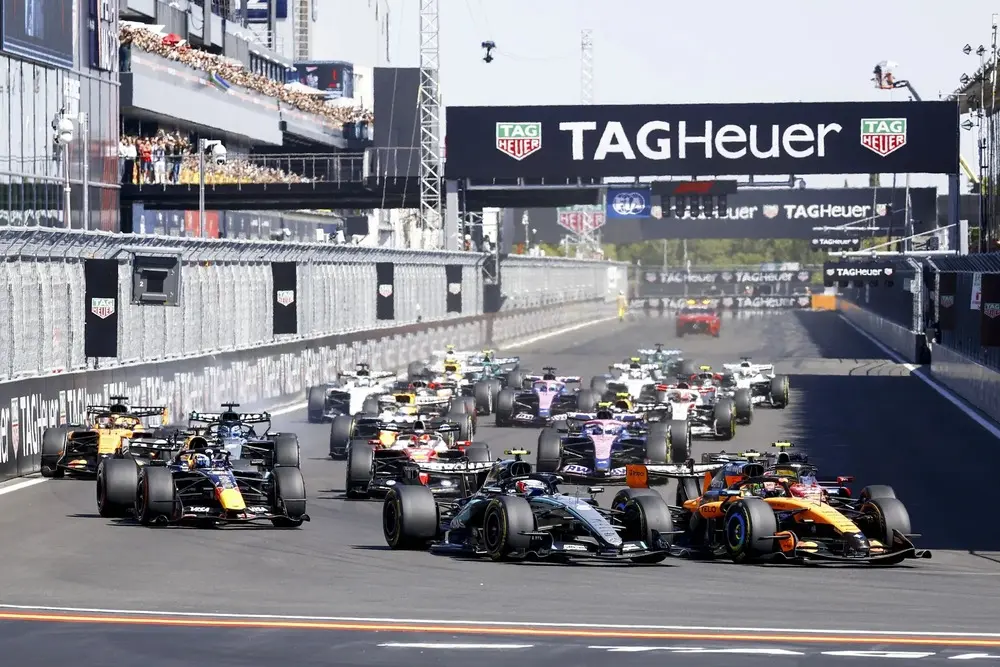

Jules Bianchi crash at the 2014 Japanese Grand Prix forever changed Formula 1 and his legacy lives on ten years after his tragic passing.
The memory of the prodigious French driver continues to resonate throughout the sport, serving as a poignant reminder of both the promising talent lost and the indelible mark he left on motorsport safety and culture.
Bianchi’s story, one filled with promise, tragedy, and enduring influence, is as relevant as ever in 2025 as the Formula 1 community pauses to reflect on his legacy.
Bianchi’s journey to the upper echelons of motorsport seemed almost preordained. Born into a racing family, his grandfather Mauro Bianchi was a renowned endurance racer while his great-uncle Lucien Bianchi had competed in Formula 1 during the sport’s early years.
Jules quickly made a name for himself in junior categories, clinching the French Formula Renault 2.0 Championship and distinguishing himself in the Formula 3 Euro Series and GP2.
It was not long before his prodigious talent caught the attention of Ferrari, leading to his induction into the prestigious Ferrari Driver Academy. This relationship would develop into one of mutual ambition, with Bianchi widely tipped as their future star.
Bianchi’s Formula 1 career commenced in 2013 with Marussia, a team perennially fighting at the back of the grid.
Despite the limitations of the Marussia MR02, Bianchi’s performances were consistently spirited, marked by technical finesse, clinical aggression, and an unwavering commitment to improvement.
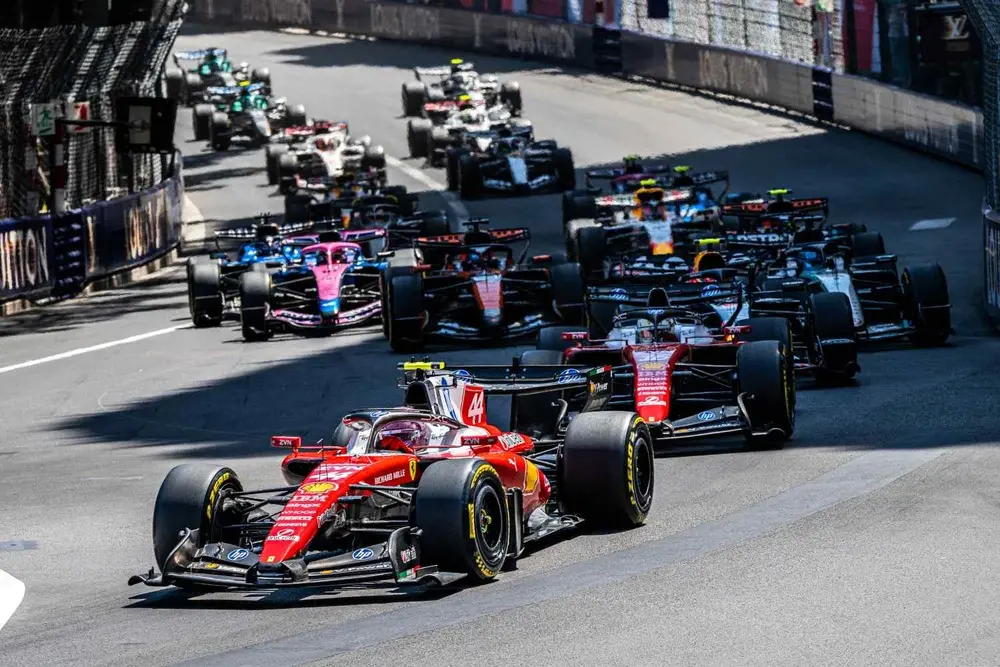
The 2014 season turned out to be a landmark year for Bianchi after delivering a masterclass performance during the Monaco Grand Prix to secure a ninth-place finish and Marussia’s first-ever championship points, etching his name among F1’s most promising talents.
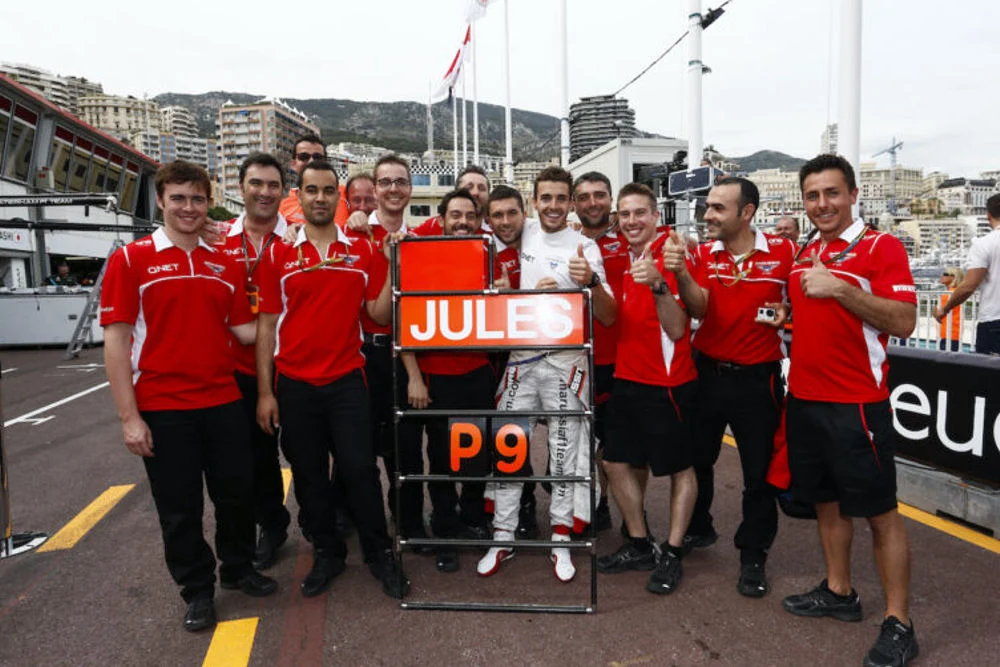
That result was more than a racing statistic; it was a statement of intent, proof positive that Bianchi possessed the unique blend of skill and mindset required for Formula 1’s highest honors.
But fate would deal a cruel blow on October 5 at the 2014 Japanese Grand Prix, as treacherous conditions combined with a sequence of misfortunes at Suzuka culminated into one of the darkest moments in modern motorsport.
Typhoon Phanfone had battered Mie Prefecture, rendering visibility and grip at Suzuka untenable. In the closing laps Adrian Sutil’s car went off track prompting the deployment of a recovery vehicle.
Double waved yellow flags were displayed to warn other drivers of danger ahead and protect track marshals who were also present to clear up debris, repair the barrier and assist in the recovery of Sutil’s damaged car.
Bianchi who had been just ahead of Sutil when the Sauber driver went off, arrived back on the scene a lap later unaware of the double yellow and lost control of his Marussia MR03, colliding with the recovery vehicle at full speed.
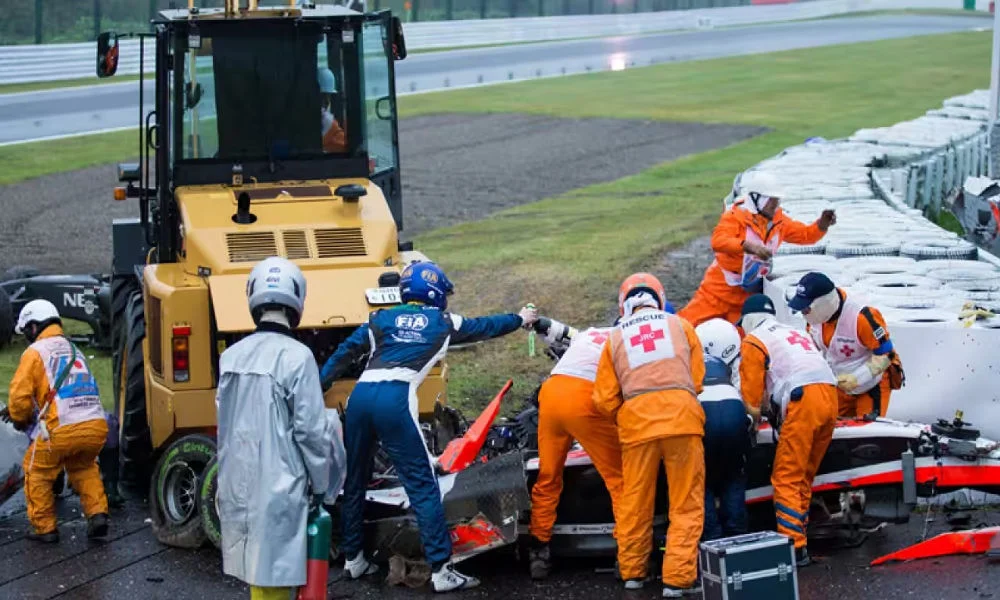
The resulting injuries were catastrophic; he suffered a diffuse axonal brain injury and was rushed into emergency surgery.
Bianchi never regained consciousness, spending nine agonizing months in a coma before succumbing to his injuries on July 17, 2015, just shy of his 26th birthday.
READ ALSO: Nine most controversial F1 races of all time
The shockwaves reverberated far beyond the paddock. For the first time in 21 years, Formula 1 mourned the death of a driver from race-related injuries recalling the tragedies that befell Ayrton Senna and Roland Ratzenberger in 1994.
Jules Bianchi crash sparked debate throughout motorsport which would later result to profound institutional changes in Formula 1.
The FIA launched a full investigation, reviewing every procedural and technical facet of race safety. Analysts scrutinized the weather conditions, the use and placement of recovery vehicles, the timing of safety cars, and the protocols governing medical response.
Perhaps the most significant and visible legacy of this process was the accelerated development and introduction of the halo cockpit protection device.
Initially met with skepticism and even ridicule by some drivers and fans, the halo quickly demonstrated its life-saving potential. Its role was unequivocally validated during Romain Grosjean’s fiery crash in Bahrain in 2020, among other incidents.
Since 2018, the halo has been a mandatory component—not only in Formula 1 but across the spectrum of single-seater categories—fundamentally raising the bar for driver safety.
READ MORE: Most F1 race wins: Formula 1 Drivers with most victories in F1 history