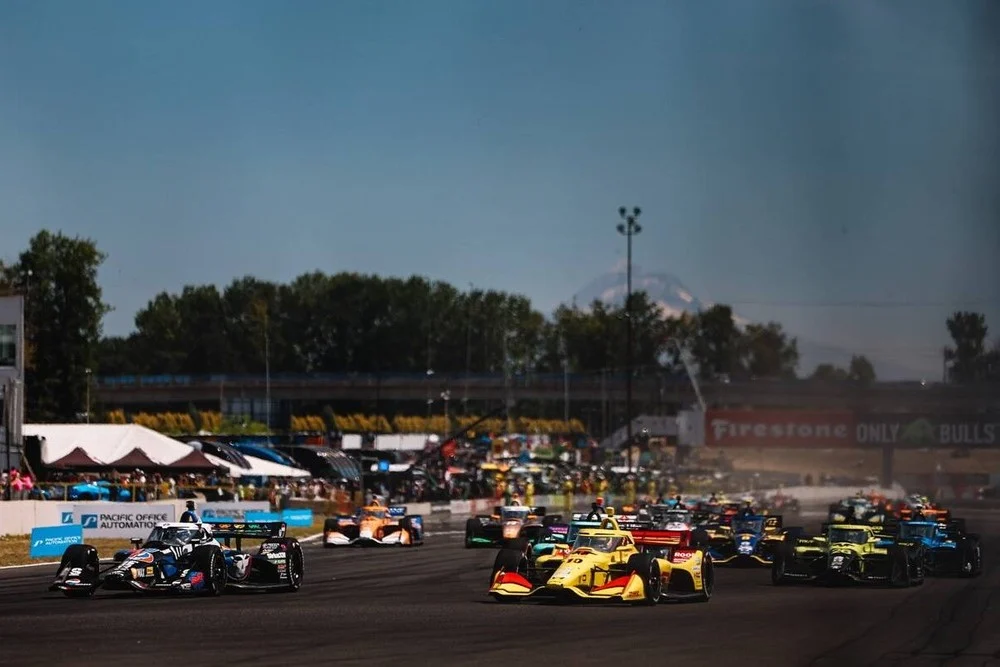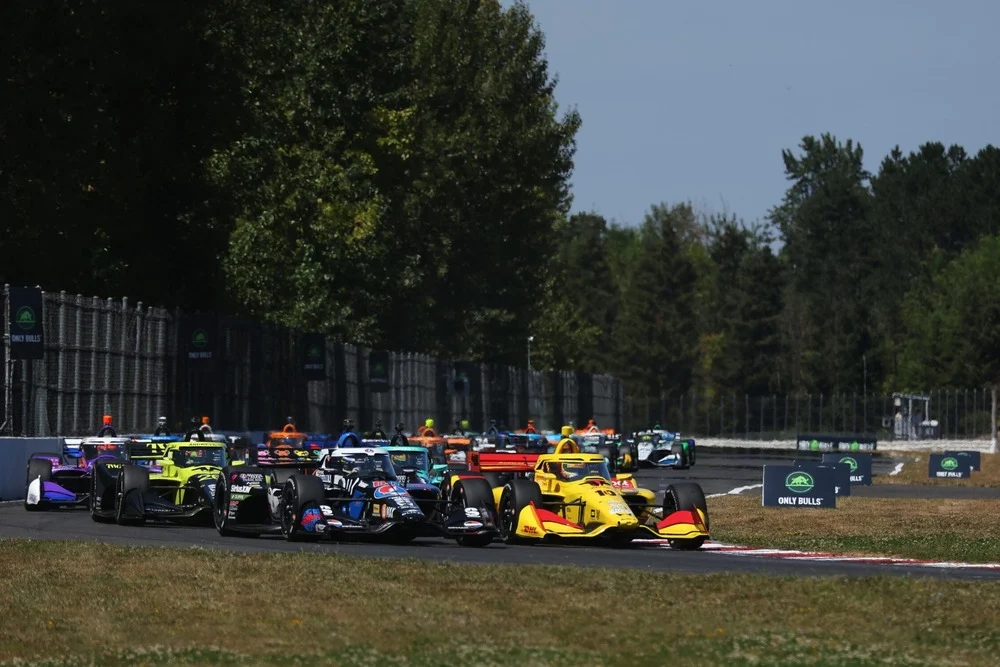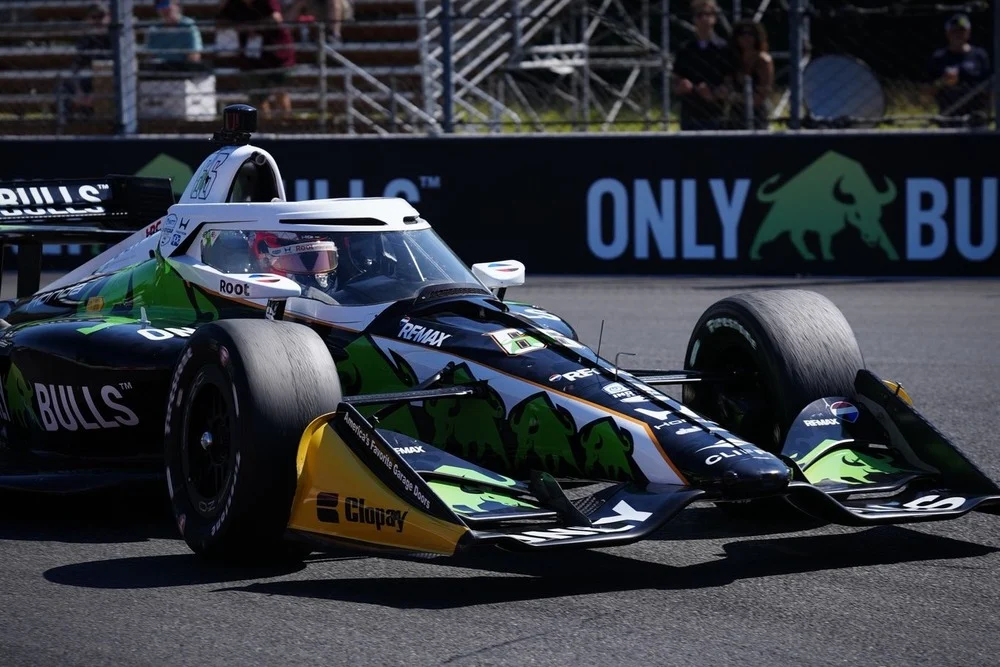

Series officials have rolled out three critical IndyCar rule changes for 2026 in a bid to promote competition and enhance driver safety, promising more dynamic racing for fans worldwide.
As the series gears up for an 18-race championship kicking off March 1 at the Firestone Grand Prix of St. Petersburg, these updates reflect IndyCar’s ongoing commitment to evolving the sport amid growing popularity and technological advancements.
Here are the major IndyCar rule changes for 2026 season:
New tire usage requirements on street courses
IndyCar is mandating updated tire requirements on street courses starting with the 2026 Firestone Grand Prix of St. Petersburg, requiring teams to utilize one set of primary compound tires (hard) and two sets of alternate compound tires (soft).
This marks an increase from the previous single-set mandate for alternates, while preserving the rule that each set must complete two green-flag laps.

IndyCar Senior Vice President of Competition and Operations Mark Sibla emphasized that this adjustment challenges drivers and strategists, fostering more wheel-to-wheel action on circuits known for rapid tire degradation.
“IndyCar is always looking into ways to improve the quality of what is already exceptional on-track action,” Sibla said. “This street circuit update will challenge drivers and strategists alike and provide an avenue for even more memorable wheel-to-wheel action at our fan-favored street events in 2026.”
The shift also responds to feedback on tire wear influenced by the hybrid energy recovery system’s added weight, which impacted outright pace in prior seasons.
Firestone’s 2026 alternate tires feature reduced drop-off characteristics, designed to encourage aggressive driving without excessive conservatism, ultimately delivering higher race quality and strategic depth.
Teams receive a standard allocation of five sets each of primaries and alternates for most road and street events, calibrated for these rules, ensuring parity while introducing variables like pit stop timing and compound management.
Tweaked practice session format for road and street courses
Practice session format on road and street courses undergo a structural overhaul for 2026, with Practice 2 adopting the split-group format of Practice 1 based on odd and even pit box numbers. Runs start with a universal 40-minute open session followed by two 12-minute group segments.
Qualifying groups will be determined by the previous race results (or 2025 points for St. Petersburg), promoting fairer track evolution simulation. This ensures all 27-plus cars get substantial track time while minimizing congestion—a common grievance on temporary circuits with limited run-off.
Additionally, pre-race warmup sessions have been extended from 25 to 30 minutes, allowing teams more time to fine tune their cars before lights out.
Superspeedway tire ramp flaps for enhanced safety
A new safety mandate requires all cars to feature superspeedway tire ramp flaps during Indianapolis Motor Speedway sessions, including the Indy 500 Open Test on April 28-29, practice, qualifying, and the race itself.
These carbon fiber components—hinged ahead of rear tires—deploy to counter aerodynamic lift in 180-degree spins, reducing airborne crashes by nearly 9% per computational fluid dynamics testing.
The flaps keep the car grounded on the track by disrupting airflow, reducing the likelihood of lift.
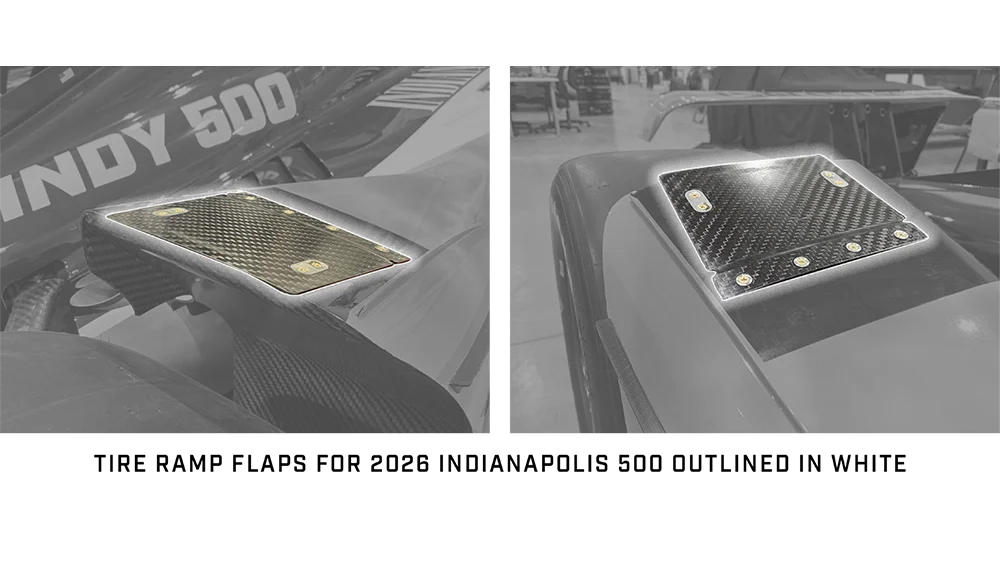
IndyCar Director of Aerodynamic Development Engineering Tino Belli credited Dallara collaboration for analyzing recent IMS incidents, like those involving Scott McLaughlin, Kyffin Simpson, and Colton Herta in 2025.
“Dallara is a tremendous partner and have joined us to closely examine spins that have occurred over the last few years at IMS,” Belli said. “This update to the rear tire ramps has proven in computational fluid dynamics testing to decrease, by nearly 9 percent, the likelihood of a car at speed ‘lifting’ after a 180-degree spin.
“We are always evaluating safety and, from a car perspective, believe this is an effectual development for a superspeedway.”
READ MORE:
2026 IndyCar Schedule: 17 races, new venues and dates confirmed
Full 2026 IndyCar driver lineup: Who will be on the grid this season?