
Relentless rains in the Netherlands have caused severe flooding and damage to Circuit Zandvoort and its surrounding infrastructure, casting doubt over the readiness of the venue for Formula 1‘s Dutch Grand Prix.
Over the course of a single night, the municipality of Zandvoort experienced torrential downpours that overwhelmed local watersheds, pushing water levels in some neighborhoods—and notably at the racing circuit—to as much as 40 to 50 centimeters in depth.
Such rapid accumulation not only brought the city to a standstill but also forced immediate disruptions to the tightly coordinated schedule that underpins any Formula 1 weekend.
Social media channels were quickly populated with sobering images showing the extent of the damage: access roads swamped, sediment-laden streams running across the track, and significant erosion reported on the circuit itself.
For the wider Formula 1 community, Circuit Zandvoort not only holds a special place in the heart of Dutch motorsport culture but has fast become a centerpiece for Max Verstappen’s legion of fans, whose “orange army” lends the event an atmosphere unmatched elsewhere in the world of racing.
The excitement surrounding each Dutch Grand Prix since the venue’s return to the F1 calendar has been enormous, driving significant local investment and international tourism.
Amid the latest turmoil, however, attention has shifted from sporting narratives and title battle speculations to logistics and safety. The technical challenges presented by water damage at a circuit are by no means trivial.
Hamilton and Leclerc test Ferrari suspension upgrade at Mugello ahead of F1 Belgian GP
F1 driver net worth 2025: The 12 richest drivers on the grid
With modern F1 cars capable of generating astonishing downforce and traveling at speeds well beyond 300km/h, even slight imperfections in track surface can have dramatic effects on performance and—more critically—safety.
Floods such as those recently experienced can undermine the foundational substrate of the tarmac, cause potholing, and wash away crucial trackside infrastructure including barriers, electronics, and signaling systems.
Early reports indicate that Circuit Zandvoort’s most vulnerable point has been its heavily banked final corner at Arie Luyendykbocht, which was resurfaced and re-profiled for the 2021 return of Formula 1 after a decades-long hiatus.
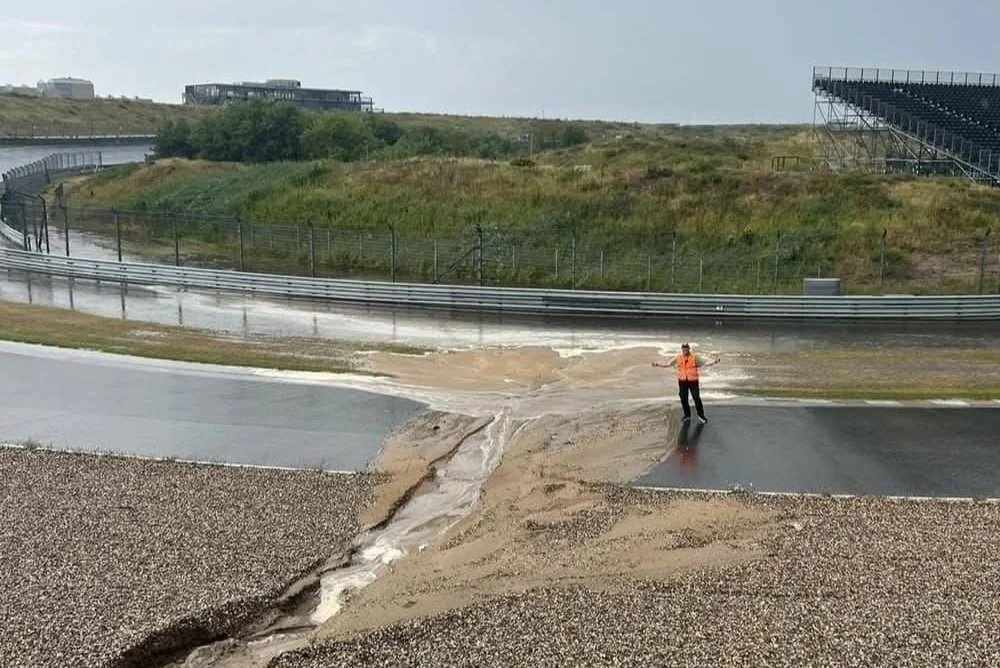
If this area has suffered structural damage or erosion, race organizers and FIA safety delegates will need to work with unprecedented speed and precision to ensure the venue meets the exacting standards of modern Grand Prix racing.
Adding to the complexity are the logistical repercussions. Access roads that have been rendered impassable by standing water disrupt not only movement of teams, equipment, and emergency vehicles, but also impact the timelines for contractors, volunteers, and hospitality staff.
With the Dutch Grand Prix scheduled less than five weeks away, each day lost to cleanup and assessment shortens the already tightly packed turnaround window available to engineers and builders tasked with making the circuit race-ready again.
Heavy machinery required for the removal of water, sediment, and debris risks causing further damage to fragile ground, creating a balancing act between urgency and care.
READ MORE: All F1 World Champions by year – Formula 1 history