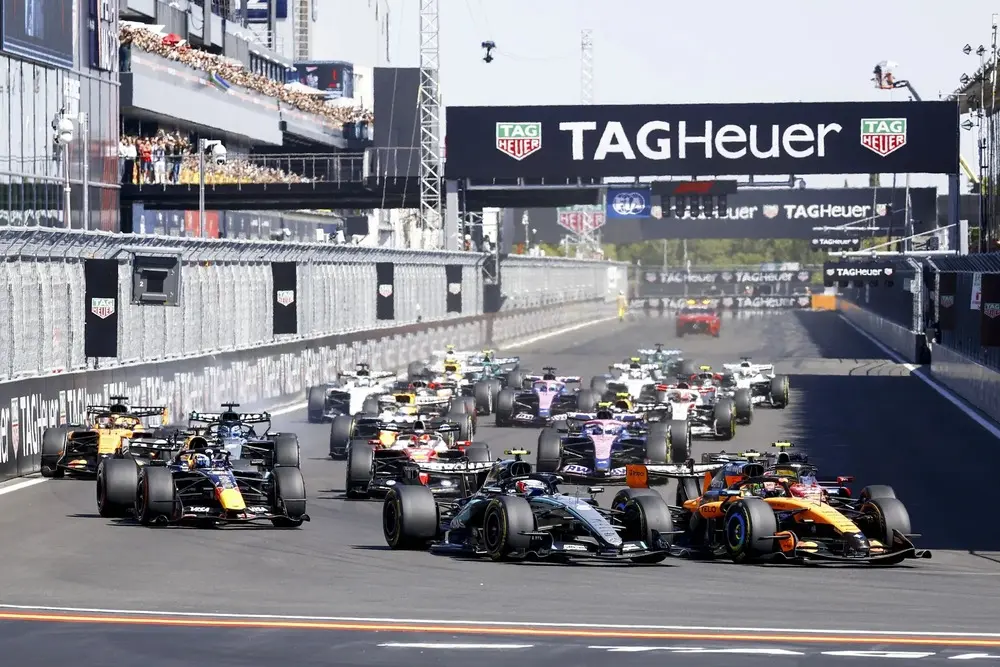
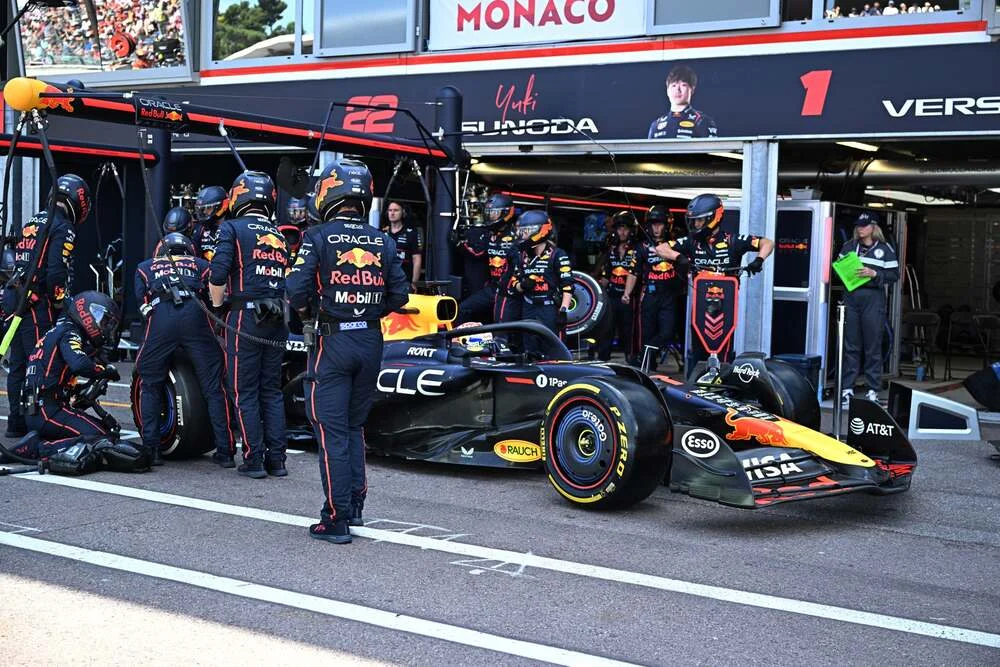
While the mandatory Monaco F1 two-stop rule was introduced in a bold attempt to inject excitement and unpredictability, race manipulation tactics and lack of oversight flawed what has long been considered as Formula 1‘s most processional race on the calendar.
The new regulation introduced by the FIA required every driver to make at least two pit stops and use three different sets of tyres, a significant departure from the traditional one-stop strategies that have defined the Monaco Grand Prix for decades.
The hope was that this would force teams and drivers into more aggressive racing, create strategic variety, and perhaps finally break the stranglehold that track position has on the outcome of this unique event.
Yet, as the chequered flag fell, the two-stop experiment left the F1 paddock and fans divided with many questioning whether the rule had achieved its intended effect or merely exposed new avenues for race manipulation and tactical gamesmanship.
The rationale behind the Monaco F1 two-stop rule was clear. The tight, twisty layout and narrow streets of Monte Carlo make overtaking nearly impossible, leading to races where the order is often set by Saturday’s qualifying session and only disrupted by accidents or safety cars.
By implementing the rule, the FIA aimed to force teams out of their comfort zones, disrupt the usual processional flow, and create more moments of tension and opportunity for bold moves.
Drivers like Max Verstappen expressed cautious optimism before the Monaco Grand Prix race, suggesting the rule could “spice things up” and introduce a new layer of unpredictability, especially if safety cars or red flags came into play.
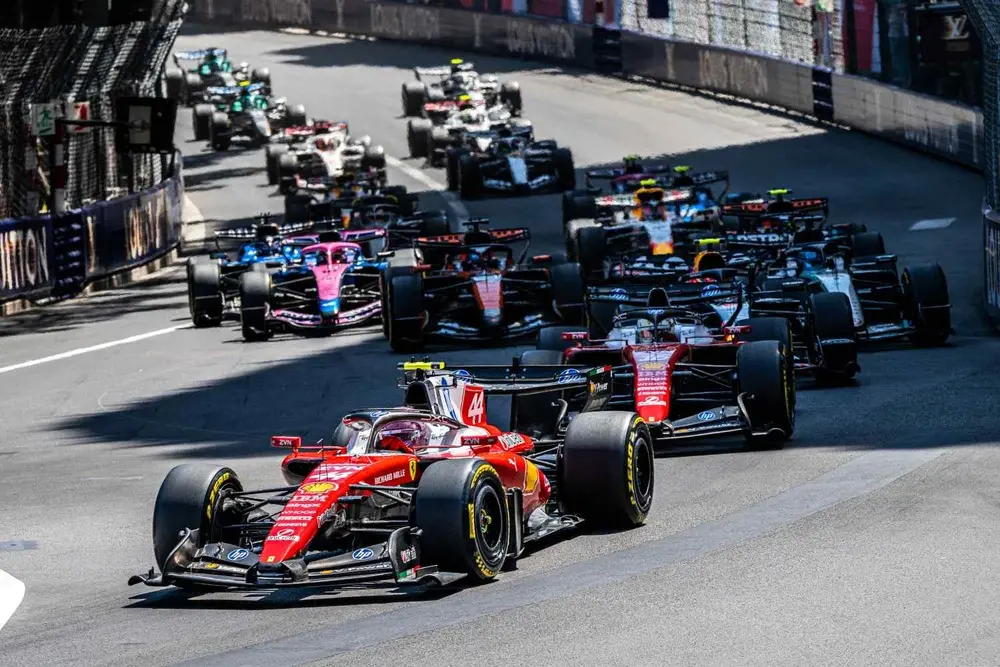
In practice, however, the race unfolded in a manner that felt all too familiar. Despite the new rule, overtaking remained virtually non-existent and the finishing order closely mirrored the qualifying results, much to the frustration of drivers, teams, and fans alike.
Chaotic Monaco Grand Prix crash ruins F1 support race
F1 Championship Standings 2025 after Monaco Grand Prix
Rule loopholes lead to race manipulation tactics
The two-stop requirement did not fundamentally alter the strategic landscape but rather shifted the focus from on-track battles to off-track tactics, with teams exploiting the rule’s loopholes in ways that many found unsatisfying.
One of the most controversial aspects of Monaco F1 two-stop rule’s implementation was the emergence of team manipulation tactics. With overtaking so difficult, teams quickly realized they could use one car to deliberately back up the field, creating a large gap to allow their leading driver to pit and rejoin the race without losing position.
This tactic was employed most effectively by Racing Bulls whose driver Liam Lawson slowed the midfield pack to a crawl, enabling teammate Isack Hadjar to make two “free” pit stops and maintain track position.
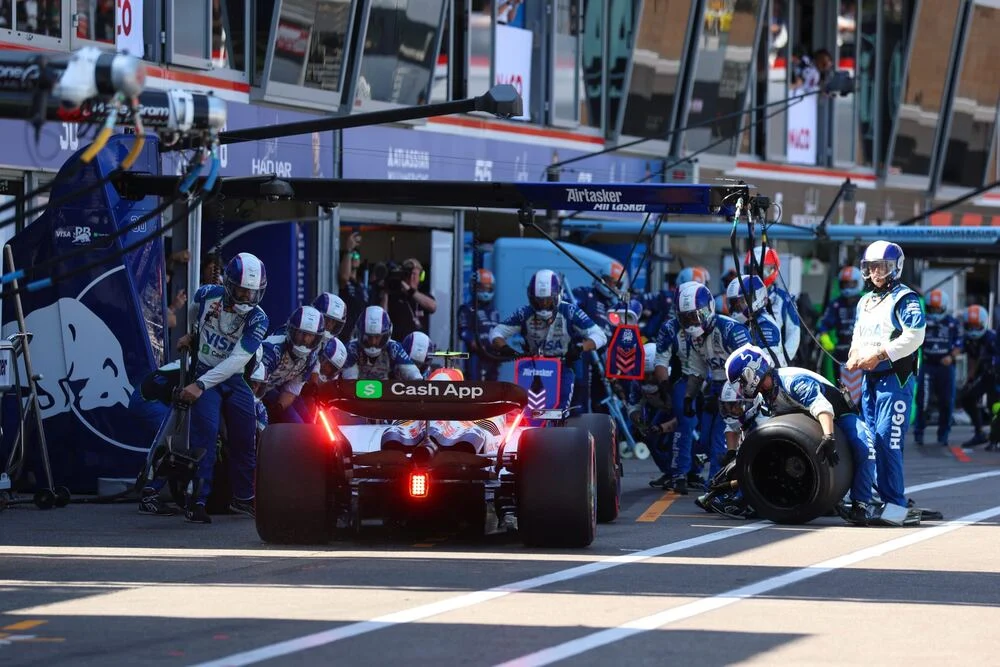
Williams and Mercedes also engaged in similar strategies with their second drivers running several seconds off the pace at times to engineer advantageous gaps for their teammates.
The race manipulation drew sharp criticism from both within and outside the paddock.
Williams driver Carlos Sainz who finished 10th was particularly vocal stating: “It is definitely something I don’t like to do and something I don’t like seeing.
“Unfortunately, Liam Lawson did it first to us which we didn’t expect. That put us into a panic mode and the only solution we could think of was to do it to the rest of the field ourselves.
“I’m just a bit disappointed with the whole race and the whole weekend. It shows the two-stop change is nothing around Monaco and people are still going to do what we did today. People are still going to manipulate the final result with the driving.
“We either come up with a solution so that you won’t be able to manipulate the race pace the way we did today, or it will always be like this. It is not the way I like to race or how I dream about racing around Monaco.”
The sentiment was echoed by other drivers and commentators who lamented that the race had become less about pure racing and more about orchestrated team tactics.
Former F1 driver and Sky Sports commentator Martin Brundle summed up the prevailing mood saying: “It was immediately clear that teams could use one car as a sacrificial lamb driving slowly to help their other car have the necessary 21-second gap to take a pit stop.
“And that’s pretty much what happened, although the extent to which particularly Racing Bulls and Williams were prepared to slow one of their cars down was quite alarming. But you can’t blame them – they both got both cars into the world championship points after a very solid qualifying performance.
“We saw selected cars four seconds off the pace with a frustrated queue behind them. Not pretty, or impressive but effective for some. But hardly what F1 stands for.”
Monaco Grand Prix race winner Lando Norris noted that while the rule forced teams to create gaps and consider new strategies, it did not fundamentally change the difficulty of overtaking or the importance of track position.
“It depends what you want. Do you want to manufacture races?” Norris asked. “There hasn’t been any more overtaking here. I thought that was what was wanted.
“Overtaking has never been good in Monaco so I don’t know why people have such a high expectation. But I also think Formula 1 should not turn into just a show to entertain people. It’s a sport. It’s who can race the best, who can qualify the best.”
MORE FORMULA 1:
2025 F1 driver salaries: How much money will each driver earn?
F1 Drivers’ wives and girlfriends: Who are current Formula 1 stars dating?
“Everything was about yesterday[qualifying]. That’s the way it’s been since whatever the first year – 50, 60 years ago. So, the last thing I want is manufactured racing and we definitely need to stay away from that and do a better job with cars, with tyres.”
“It definitely made it a bit more tense at a few points,” he said. “You had to push more at certain points to kind of recover the safety car windows to other cars around you, or put yourself outside of someone else’s safety car window.
“So there were some strategic elements involved. But ultimately, at the front, I don’t think it changed a whole lot.”