
The sanctioning body has introduced ten critical NASCAR rule changes for 2026 season, signaling a bold evolution in stock car racing’s competitive landscape.
These updates—some announced in early 2026 and others at the annual rules briefing at NASCAR’S research and development center in Concord—aim to enhance fairness, boost performance, and refine championship contention, across the sport.
Here are the major NASCAR rule changes for 2026 season:
Revival of Chase championship format
The most transformative shift in NASCAR’s 2026 framework is the revival of the iconic Chase championship format for the NASCAR Cup Series, effectively dismantling the elimination-style playoffs that have dominated since 2014.
Under the new structure, the top 16 drivers based purely on regular-season points—without automatic “win-and-in” berths—advance to a 10-race Chase culminating in the championship showdown.
This reset points system awards the regular-season champion 2,100 points to start the Chase, with each subsequent qualifier dropping in five-point increments down to 2,000 for the 16th position, rewarding consistency over high-stakes gambles.
The return to roots addresses long-standing criticisms of the playoff system’s volatility, where a single misfortune could eject frontrunners from title contention.
The elimination of advancement guarantees for winners ensures every points-paying position remains crucial, potentially leading to fiercer mid-pack battles and strategic depth unseen in recent years.
In-Season Challenge revamp
NASCAR Cup Series is maintaining the In-Season Challenge with only the top 32 drivers in the point standings eligible in the single-elimination tournament that takes place over five races mid-season.
The best driver in each matchup advances to the next round and the ultimate winner earns $1 million. The five races making up the In-Season Challenge this year are Sonoma, Chicagoland, EchoPark Speedway, North Wilkesboro and Indianapolis.
Seedings for the challenge will be set by points position following the race at Pocono on June 14 — two weeks before Sonoma.
Fastest lap bonus point restriction
A refined fastest lap bonus point rule targets exploitation of loopholes, stipulating that cars entering the garage for repairs during a race forfeit eligibility for the award even if quicker laps preceded the visit.
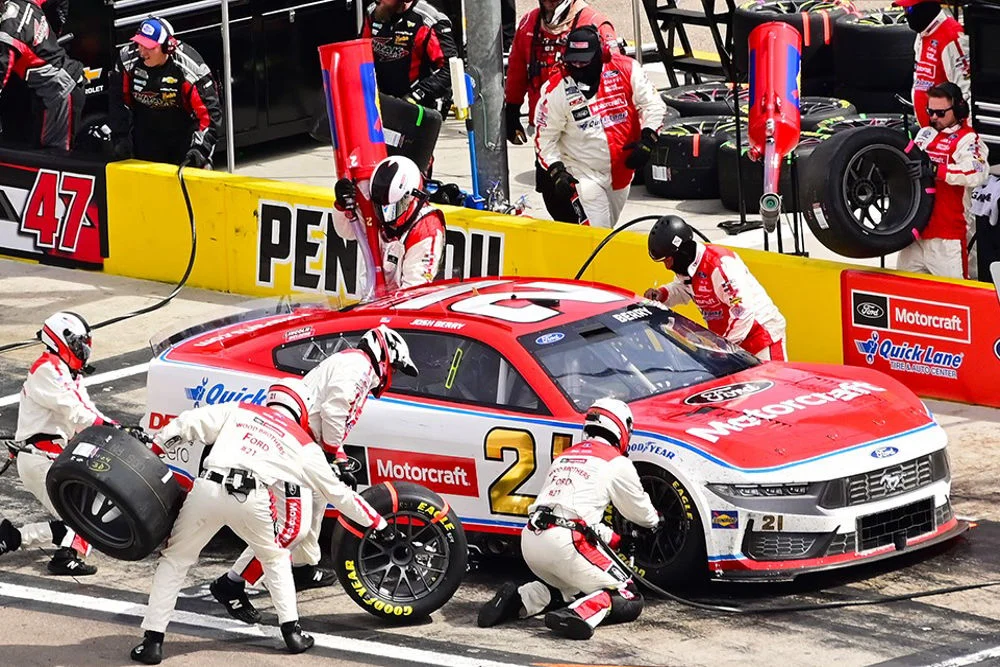
Previously, teams could game the system by pushing damaged cars in non-competitive garage stints; now, only laps under green-flag racing conditions—deemed “competitive laps”—count toward the bonus across Cup, O’Reilly, and Truck Series.
This preserves the incentive for on-track speed while ensuring integrity, as post-garage heroics no longer inflate standings artificially.
Race win bonus points up to 55
Elevating the value of victory, NASCAR has increased race win bonus points to 55 from the previous 40, amplifying their impact without granting automatic playoff entry.
This adjustment underscores wins as premium achievements that propel drivers up the standings, offering a substantial edge in Chase qualification amid the points-centric regular season.
Increased horsepower on short tracks
Performance enthusiasts rejoice with NASCAR’s confirmation of increased horsepower on short tracks—from 670 to 750—under 1.5 miles and all road courses, up from prior outputs, paired with a three-inch rear spoiler and reduced diffuser strakes.
Targeted venues include Bristol Motor Speedway, Darlington Raceway, Dover Motor Speedway, Nashville Superspeedway, and World Wide Technology Raceway at Gateway, promising rawer acceleration and side-by-side racing.
This power bump, teased in late 2025, aims to counter criticisms of overly homogenized intermediates by unleashing engine grunt where mechanical grip reigns.
Mandatory A-post flaps in every race
Safety takes center stage with A-post flaps—deployable aerodynamic devices introduced at superspeedways in 2025—now mandated across every NASCAR track in 2026.
Previously optional beyond Talladega, Daytona, and Atlanta, these flaps activate in spins to elevate the nose, reducing rollover propensity and wall impacts.
A new stipulation requires the underlying surface to be bright orange for visibility, superseding vague “high-contrast” mandates.

This universal rollout stems from crash analyses showing flaps’ efficacy in redirecting cars skyward rather than into barriers, credited with averting multi-car pileups. Fabricators standardize brighter coatings for rapid inspector verification, streamlining pre-race tech checks.
Open Exemption Provisional Adjustment
The Open Exemption Provisional (OEP) rule has been refined to ensure more predictable field sizes at events with high entry demands, such as the Daytona 500.
Previously, if a world-class driver invoked the OEP—guaranteeing their spot regardless of qualifying speed—the field expanded to 41 cars only if they failed to qualify on time; otherwise, it stayed at 40, potentially displacing a regular open entry.
Now, granting the OEP automatically expands the field to 41 cars, comprising 36 chartered entries, four open qualifiers, and the OEP driver.
This eliminates uncertainty for teams, preventing scenarios where a strong open qualifier like Justin Allgaier misses out due to a celebrity driver like Helio Castroneves qualifying comfortably.
Daytona 500 qualifying format simplification
The Daytona 500 qualifying format undergoes a significant overhaul for 2026, designed to reward outright speed while preserving the intensity of the Duel races.
Single-car qualifying on Wednesday, February 12, will determine the front row for the 40-car field, with the top two open cars—those without charters—automatically locked into the race, bypassing Duel participation for the spots.
Previously, open cars contended more aggressively in the Duels for transfer positions; now, the remaining open entries compete solely for one transfer spot per Duel ensuring the highest-finishing non-locked open car from each advances.

This tweak addresses past ambiguities where top open qualifiers still risked elimination, fostering a clearer path for talents like Jimmie Johnson, who secures a provisional start in 41st if needed via his elite driver exemption.
Minimum age requirement update
NASCAR O’Reilly Auto Parts Series lowers its minimum age requirement to 17 on tracks 1.25 miles or shorter and road courses, which is between the 16-year-old minimum for Craftsman Truck Series and 18 for Cup Series.
Announced late 2025, this codified rule accelerates prospects’ pro debuts, while mandating safety protocols.
Cup Series drivers restrictions
Points-earning Cup Series drivers face expanded bans from late-season lower-division races: ineligible for the final nine O’Reilly Auto Parts Series events and final seven Craftsman Truck Series races.
This loosens prior finale-only restrictions, prioritizing national series development and reducing “Cup piggybacking.”
READ MORE:
2026 NASCAR Cup Series schedule: All venues and dates
2026 NASCAR Daytona 500 schedule: Start times, where to watch