
The fresh Red Bull 2026 F1 livery was revealed alongside new engine partner Ford at a high-profile event in Detroit, marking a pivotal moment as Formula 1 gears up for its most transformative regulatory era yet.
The unveiling itself was executed with trademark flair, featuring a breathtaking aerial stunt by team-affiliated pilot Martin Sonka, who dramatically tore away the covering sheet from the RB22 using his stunt plane, sending the crowd into raptures under the station’s illuminated arches.
This jaw-dropping moment perfectly encapsulated the event’s theme of innovation and audacity, drawing parallels to Red Bull’s disruptive entry into F1 two decades ago.
Four-time world champion Max Verstappen was joined by his new teammate Isack Hadjar on stage to inspect the car up close, their reactions broadcast live to millions of fans worldwide.
Red Bull‘s sister team Racing Bulls jointly revealed their predominantly white livery with sharpened blue accents, driven by Liam Lawson and rookie sensation Arvid Lindblad.
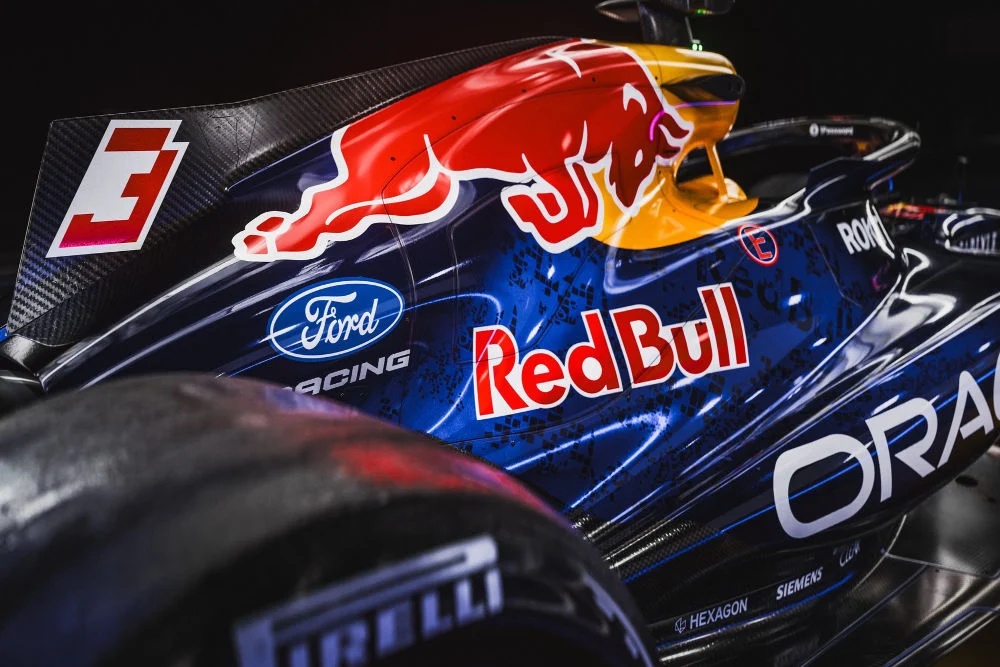
Delving into the aesthetics of Red Bull 2026 F1 livery, the design masterfully blends nostalgia with modernity, reverting to a glossy finish reminiscent of the team’s 2005 debut cars after years of matte schemes that dominated recent seasons.
The chassis is covered by a dominant blue glossy shade that evokes depth and premium quality, with intricate jacquard patterns incorporating lighter blue tones for added texture and visual dynamism.
The iconic Red Bull sun and bull logo takes center stage on the engine cover, outlined in bold white for maximum pop, while heritage white bases on certain panels provide clarity and allow sponsor placements—like the prominent Ford branding on the rear wing and sidepods—to stand out without overwhelming the core identity.
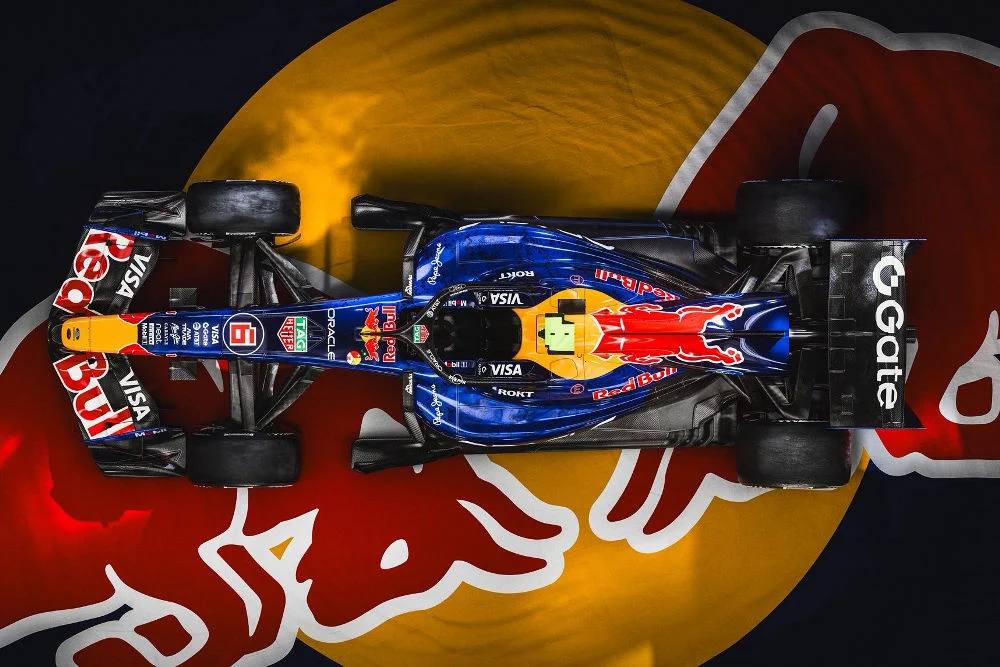
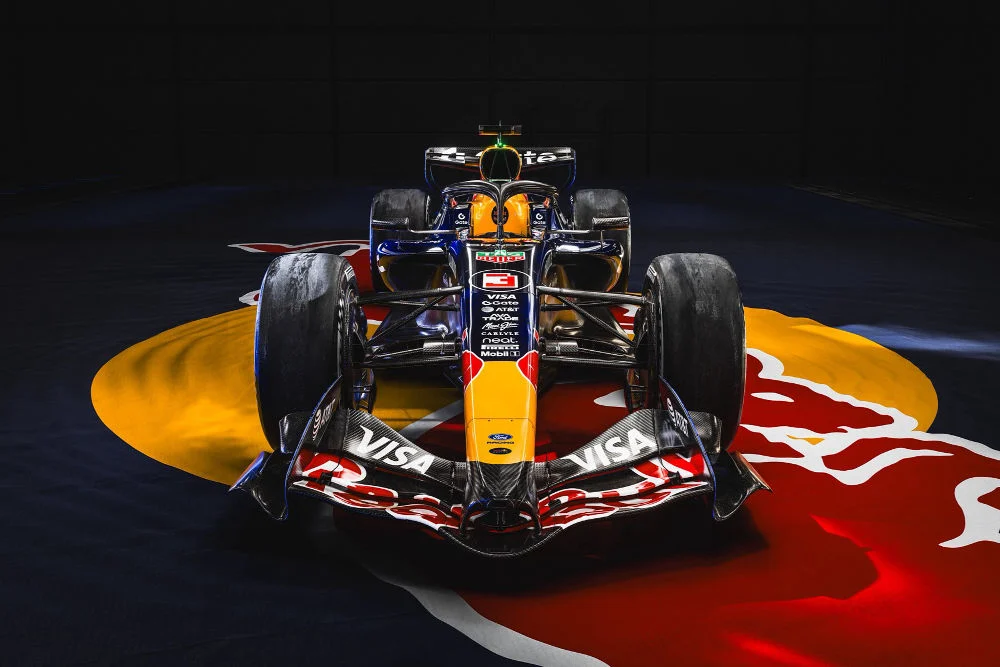
Black accents strategically punctuate the blue expanse, tracing aerodynamic contours along the sidepods, halo, and front wing, lending a sleek, aggressive profile that aligns with the Red Bull RB22’s anticipated compact chassis dimensions under the new rules.
The front wing features metallic sheen elements that catch the eye, promising to make the car a camera magnet during preseason testing in Bahrain.
Sponsor integrations remain tasteful yet visible: Oracle’s red hues on the nose cone, distinctive patterns from title partners like Bybit and Tag Heuer, and Ford’s oval emblem prominently displayed, signaling the powertrain alliance.
This visual refresh arrives at a watershed moment for Red Bull, coinciding with the debut of Red Bull Ford Powertrains, the team’s ambitious in-house engine program after parting ways with Honda who shifted to a works deal with Aston Martin.
Red Bull Powertrains CEO Ben Hodgkinson reflected on the “blank sheet” excitement of bootstrapping the program, attracting “bold and audacious” talent to fuel rapid innovation amid durability hurdles.
“I loved the idea of it being a blank sheet of paper, not just the power unit but the whole company, so we could custom build it to what we knew the regulations were going to be, which was a pretty cool opportunity,” said Hodgkinson.
“The gravity of what that meant took a while to really sink in and trying to find what’s turned into 700 people in a short space of time has been really challenging.
“If you create a really bold and audacious project it only really attracts bold and audacious people, so those people fit the Red Bull culture absolutely like a glove.
“It’s brilliant for the rate of innovation, so it’s been an exciting, pretty intense four years.”
The full features of the Red Bull RB22 will be unveiled once it exits the garage at the first pre-season testing programme in Barcelona in less than two weeks’ time.
READ MORE:
Confirmed 2026 F1 car launch dates: When will teams reveal their new liveries?